FIRE PROTECTION FOR DATA CENTERS: EXPERT ANSWERS FROM TERPconsulting
TERPconsulting’s experts explain code requirements, design strategies, and best practices for preparing fire protection, detection, and suppression systems for data centers.
 Data centers are mission-critical environments where even minor disruptions can result in major financial and operational impacts. Because of this, fire protection strategies must balance code requirements, equipment protection, rapid response, and minimal downtime. At TERPconsulting, our fire protection engineers, code consultants, and special hazard specialists routinely support data center operators, developers, and construction teams nationwide. In this article, our experts answer frequently asked questions about fire safety in data centers.
What fire suppression systems are best for data centers?
The “best” system depends on the data center’s design, risk profile, and business continuity expectations. Most facilities use a layered approach, combining:
- Clean agent systems for early suppression within enclosed critical rooms
- Preaction sprinkler systems for code-required water-based protection
- Advanced smoke detection
- Fire alarm and control systems for coordinated response
This combination provides fast detection, non-water primary suppression in critical areas, and reliable backup using water-based systems.
Do data centers require sprinklers?
Yes. Under the International Building Code (IBC) and NFPA 13—Standard for the Installation of Sprinkler Systems, data centers are required to be protected by automatic sprinkler systems unless a specific exemption or approved engineering approach is used. Even when clean agents are installed, sprinklers remain the standard for life safety, property protection, and code compliance.
 Should data centers use preaction sprinkler systems?
Nearly all modern data centers use double-interlock preaction systems, which require both detection and pipe activation before water enters the system. This reduces the risk of accidental discharge and is considered the preferred sprinkler configuration for:
- Data halls
- UPS rooms
- Electrical rooms
- MDF/IDF rooms
Preaction systems strike an effective balance between reliability, code compliance, and equipment protection.
Should data centers use water mist?
Water mist systems can be effective in certain specialized applications, particularly where:
- Reduced water damage is critical
- Lower water supply demands are beneficial
- Localized protection is needed
However, water mist is not yet a universal replacement for sprinklers in most jurisdictions. It may be considered as part of an alternate means and methods (RFAM) approach, but must be carefully evaluated for compatibility with equipment layouts, airflow velocity, and AHJ acceptance.
Should data centers use special suppression systems?
Yes, most high-reliability data centers supplement sprinklers with special hazard suppression systems, especially in mission-critical rooms. Clean agents are the most common choice because they:
- Extinguish fires quickly without damaging equipment
- Require minimal clean-up
- Allow rapid return to service
- Are safe for occupied spaces
Other special hazard systems (such as CO₂) are generally avoided in normally occupied areas. TERPconsulting can help determine which technology aligns with the facility’s design and operational goals.
How are hot and cold aisles of data centers protected?
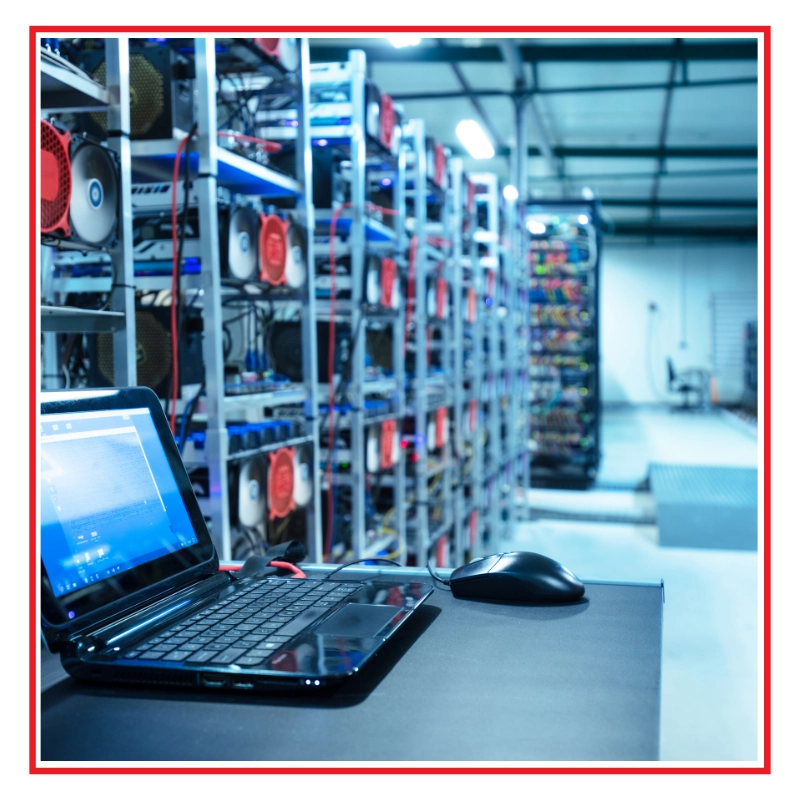
Data hall configurations, including hot/cold aisle containment, affect how detection and suppression systems are engineered. Typical strategies include:
- Air sampling detection (ASD) inside and above aisles
- Spot detection where airflows are predictable
- Preaction sprinklers installed above containment
- Clean agent systems serving the overall room
Additionally, containment designs must ensure that fire and smoke detection systems are not obstructed and that suppressant concentrations disperse properly. TERPconsulting often performs modeling and analysis to verify that containment does not negatively impact system performance.
Do data centers require a fire alarm and detection system?
Yes, it is typically code-required for large data centers and required for any application that involves fire/smoke detection. Data centers rely on robust detection due to their airflow patterns and mission-critical nature. Most utilize:
- Aspirating smoke detection systems for very early warning
- Multiple detection zones for preaction activation
- Integrated fire alarm controls tied to HVAC, security, emergency power, and suppression systems
Early detection is essential to minimizing equipment damage and maintaining uptime.
 Is a fire protection/safety engineer needed for data center projects?
Absolutely. Data centers involve complex interactions between mechanical systems, electrical infrastructure, suppression systems, and code requirements. A licensed fire protection engineer (FPE)— TERPconsulting has 18 licensed FPEs across the United States and in Spain—provides:
- Code consulting and design guidance
- Fire modeling and smoke control analysis
- Coordination of detection, suppression, and HVAC interfaces
- Review of containment impacts on fire protection
- Special inspections, commissioning, and acceptance testing
- Support for alternate means and engineering judgments
Engaging a fire protection engineer early helps mitigate risk, prevent redesigns, and ensure compliance with industry standards and AHJ expectations.
Your Data Center’s Fire Protection Partner
TERPconsulting supports data center projects from concept through commissioning. Whether designing new facilities, performing third-party testing, or developing alternative means and methods (RFAMs), our team helps owners, architects, builders, and developers achieve safe, resilient, and code-compliant operations.