
Basics of Fire/Life Safety Compliance in Modular Construction
About This Project
Key fire and life safety compliance requirements for modular construction, including code references, fire-rated materials, sprinklers, and alarms
by Rob Sontag, CFPS
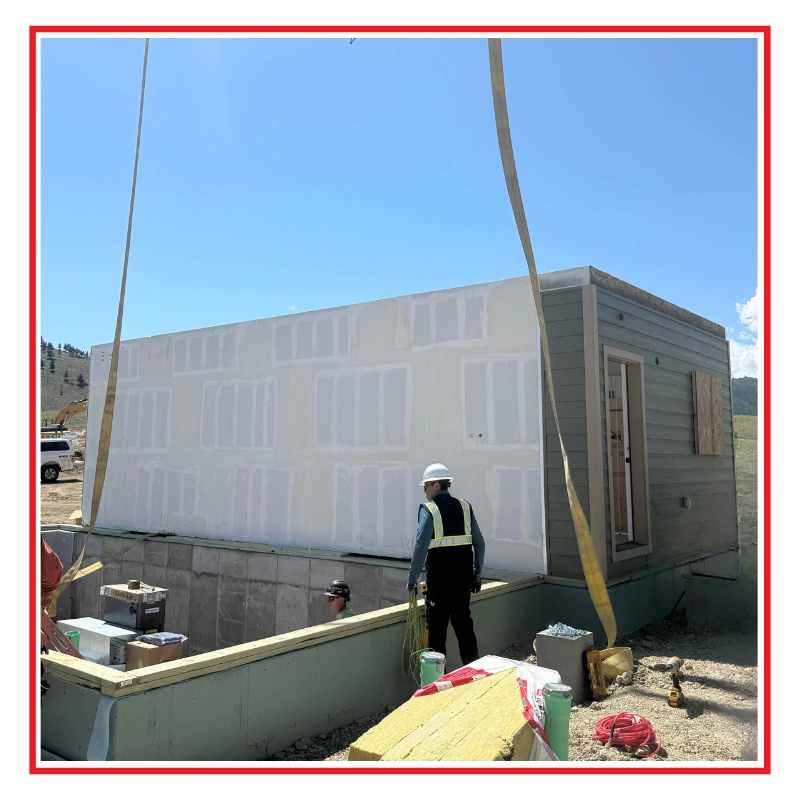
Modular construction has become one of the fastest-growing trends in the building industry, most recently being employed in the building of airports, healthcare facilities, and university dormitories. This is because modular or pre-manufactured building projects offer advantages such as accelerated timelines, improved quality control, and reduced environmental impact. Instead of constructing buildings entirely on-site, modular projects use prefabricated modules manufactured in factories and then transported to the construction site for assembly.
While this innovative approach provides clear benefits, it also introduces new challenges—particularly in terms of fire and life safety compliance. Modular construction requires careful coordination among design teams, code officials, and contractors to ensure that safety systems are correctly designed, installed, and integrated across both factory-built modules and on-site connections.
As TERPconsulting’s modular construction lead, I will explore the key aspects you need to know about the compliance involved in fire and life safety of prefabricated construction projects, including code references, material considerations, and fire protection system integration.
Let’s begin with the most frequently asked questions:
Do modular buildings need fire sprinklers?
Yes. Modular buildings must comply with NFPA 13, 13R, or 13D as required by the locally adopted building and fire codes, which typically require sprinkler protection based on occupancy and building size.
Are modular construction materials fire-rated?
They can be. Walls, floors, and ceilings in modular construction must meet fire-resistance ratings per the locally adopted building and fire codes.
How are fire alarm systems handled in modular buildings?
Factory-installed devices are common, but full integration, wiring, and acceptance testing must be performed onsite in accordance with NFPA 72 as required by local building and fire codes.
What codes apply to fire and life safety in modular construction?
Key references include the IBC (Chapters 7, 9, and 31), NFPA 101, NFPA 13, NFPA 72, and NFPA 241 for construction-phase safety.
Is modular construction safe during the assembly phase?
Yes, if managed properly, compliance with IBC Chapter 33 and NFPA 241 ensures temporary fire protection, storage precautions, and hot work safety during the assembly process.
 Key Codes and Standards for Modular Construction
As you likely know, several different organizations promulgate model codes (NFPA and ICC being the primary ones in the United States). Each of those codes is periodically updated with new editions (generally every three years), and most authorities having jurisdiction amend the model code when they adopt it. In this article, I will refer to the 2024 editions of the International Building Code and the International Fire Code without any amendments. As always, you should consult with your local AHJs to verify which codes and editions they are on and what amendments they have adopted.
Because modular construction blends factory manufacturing with traditional on-site building, it must comply with multiple layers of codes and standards. The following are among the most significant:
- International Building Code (IBC), Chapter 7 – Fire and Smoke Protection Features: Governs fire-resistance ratings of walls, floors, and penetrations between modules.
- IBC Chapter 9 – Fire Protection and Life Safety Systems: Addresses fire sprinklers, fire alarms, smoke control, and other active systems.
- IBC Chapter 31 – Special Construction: Includes provisions specific to certain types of prefabricated and modular buildings, outlining structural and fire safety requirements.
- NFPA 101 – Life Safety Code: Provides occupant life safety requirements, including means of egress, occupancy classification, and fire resistance.
- Referenced Standards for the Installation of Sprinkler Systems – NFPA 13, 13R, or 13D: Establishes criteria for fire sprinkler system design and installation in modular and traditional buildings.
- NFPA 72 – National Fire Alarm and Signaling Code: Details requirements for fire alarm system design, communication pathways, and survivability of circuits.
- International Fire Code (IFC), Chapter 33 – Fire Safety During Construction and Demolition: Outlines fire safety requirements to protect buildings, workers, and sites during construction and demolition.
- NFPA 241 – Safeguarding Construction, Alteration, and Demolition Operations: Addresses fire safety requirements during the construction and staging phases of modular buildings.
The key challenge is ensuring these codes are applied consistently across both the manufacturing facility and the final project site.
Fire and Life Safety Implications of Modular Materials
Because modular units are prefabricated, the choice of materials has a direct impact on fire safety performance. The way modules are assembled can create unique fire and smoke spread risks that differ from conventional construction.
Fire-Resistance Ratings
- Generally, modular walls, floors, and ceiling assemblies must be tested for fire resistance per ASTM E119 or UL 263, ensuring they achieve the necessary fire-resistance ratings as required by the IBC.
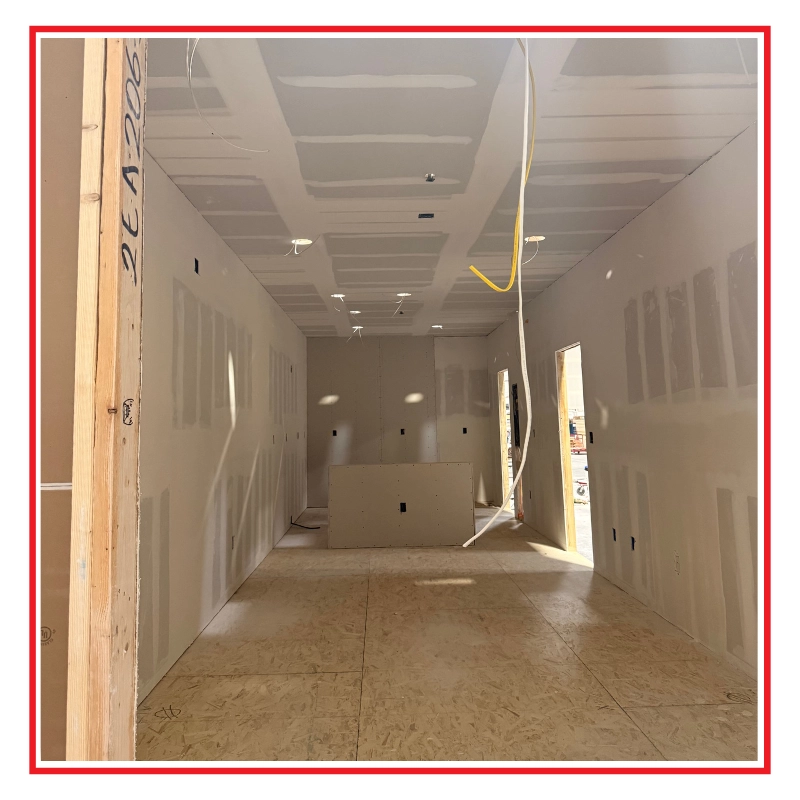
- Fire and smoke barriers must extend through the entire modular assembly. Joints, seams, and penetrations between modules must be protected in accordance with IBC Chapter 7. Special attention needs to be given to inspecting these assemblies, where the modular units are conjoined when assembled on-site.
Combustibility and Interior Finishes
- Factory and field-installed finishes, adhesives, and insulation must comply with IBC Section 803 for flame spread and smoke development, tested in accordance with ASTM E84. Special attention needs to be paid to inspecting these materials, particularly when the modular units are assembled onsite and are conjoined with each other.
- Combustible materials are restricted in certain construction types and occupancies under IBC Section 603. Careful plan review and inspection are required to ensure that prefabricated assemblies meet non-combustibility requirements.
Transportation and Storage Risks
- Multiple modular units may be stored onsite before assembly, sometimes for extended periods. During this time, combustible components are exposed without full fire protection systems in place. Caution must be exercised when placing these units, ensuring adequate separation from each other, any existing structures, other accumulations of combustible materials, and flame sources such as hot work areas. Compliance with IBC Chapter 33, NFPA 241, and local fire code provisions is critical to minimize hazards.
 Fire Sprinkler Systems in Modular Construction
Integrating sprinkler systems into modular buildings requires advanced planning and consideration.
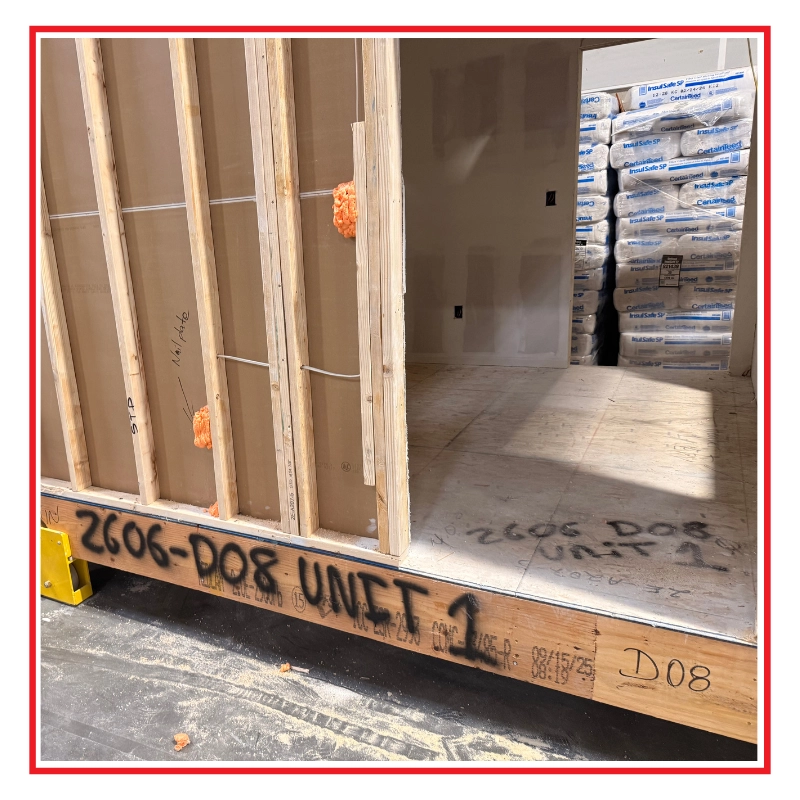
- Pre-installation in factories: Some sprinkler piping can be installed during manufacturing; however, these systems must be carefully designed for field connections to ensure proper alignment and zoning once modules are stacked. Because interior finishes are frequently applied at the factory, it is recommended that a hydrostatic test be conducted on each unit at the factory to verify the integrity of the piping before the interior finishes are installed.
- System testing: Even if piping is pre-installed and tested at the factory, modules require hydrostatic testing and acceptance testing once assembled onsite, in accordance with NFPA 13. This serves to not only validate the integrity of the connections made between units onsite but also to verify that no new leaks were introduced into the system piping during transit.
- Concealed spaces: Joints between modular assemblies may create combustible concealed spaces or voids. NFPA 13 requirements for covering concealed spaces apply equally to modular projects and must be considered during the design phase.
Failure to coordinate factory-installed piping with the final system layout can result in costly rework and delays.
Fire Alarm and Detection Systems
Fire alarm and detection systems present similar challenges in modular construction.
- Factory-installed devices: Smoke detectors, strobes, and other initiating and notification appliances can be pre-installed but must be fully integrated into a complete building system at the project site.
- Communication pathways: Per NFPA 72, communication between modules may need to meet survivability requirements, meaning wiring pathways may need to be protected from physical damage and fire exposure. Special attention needs to be applied to inspecting the connections of the wiring between units to ensure the continuity of the survivability protection assemblies.
- Acceptance testing: Regardless of factory installation, the Authority Having Jurisdiction (AHJ) will require end-to-end acceptance testing once modules are assembled onsite.
Construction-Phase Fire Safety
Fire safety is not only about the completed building. During modular construction and staging, risks are heightened due to incomplete fire protection systems.
- IBC Chapter 33 and NFPA 241 require fire extinguishers, standpipe availability, and fire watch procedures during construction.
- Temporary fire barriers or physical separations may be necessary when modules are stored onsite before final assembly. If multiple units are to be stored on site before assembly, a larger area may need to be designated for adequate and safe storage of the units within the confines of the construction security fencing and under the supervision of site security.
- Hot work must follow permit procedures and fire watch requirements. Hence, where there is to be pipe cutting or welding of pipes to conjoin adjacent units’ plumbing or mechanical systems, special attention must be given to ensure all hot work procedures are being followed.
Early coordination with the AHJs is essential to establish acceptable fire safety practices during staging and assembly.
The Bottom Line: Proactive Planning Is Key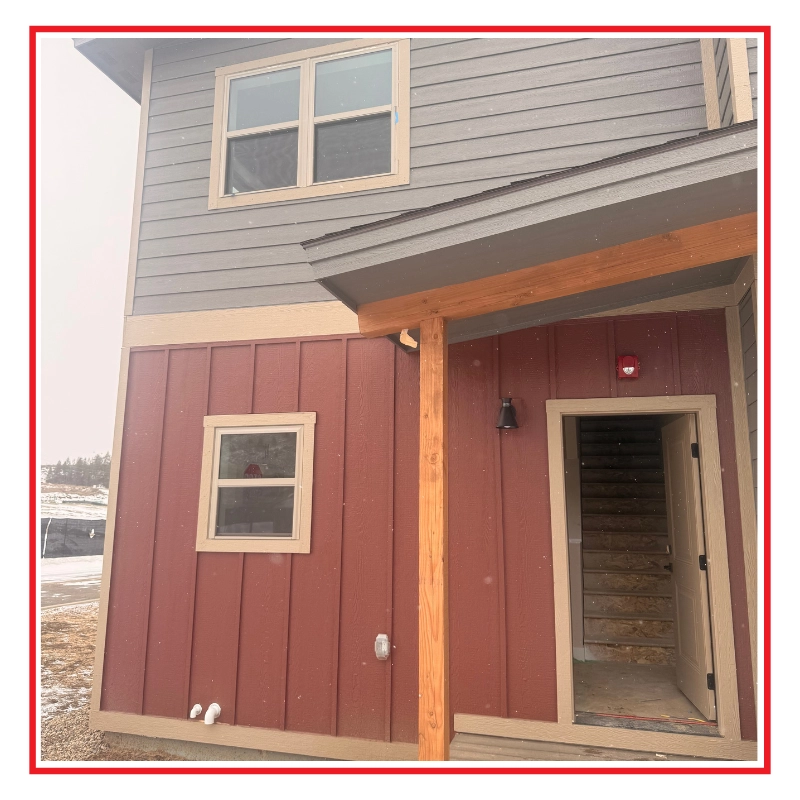
Modular construction can deliver high-quality, cost-effective buildings with significantly shorter construction schedules, provided that fire and life safety compliance is prioritized from the start. To achieve compliance and ensure occupant protection, project teams should:
- Apply IBC, NFPA 101, NFPA 13, and NFPA 72 requirements consistently to both factory-built modules and field assembly.
- Select code-compliant materials that meet fire-resistance, combustibility, and flame spread requirements.
- Plan for seamless sprinkler and fire alarm integration, including testing and acceptance procedures.
- Maintain fire safety during construction with compliance to IBC Chapter 33 and NFPA 241 and local fire code provisions.
With carefully planned design and collaboration, modular construction projects can achieve the same—or higher—levels of fire and life safety as traditional buildings, while still benefiting from the efficiency and innovation that modular methods provide.
If you have a question about a modular construction project, please reach out to Rob Sontag, CFPS.